
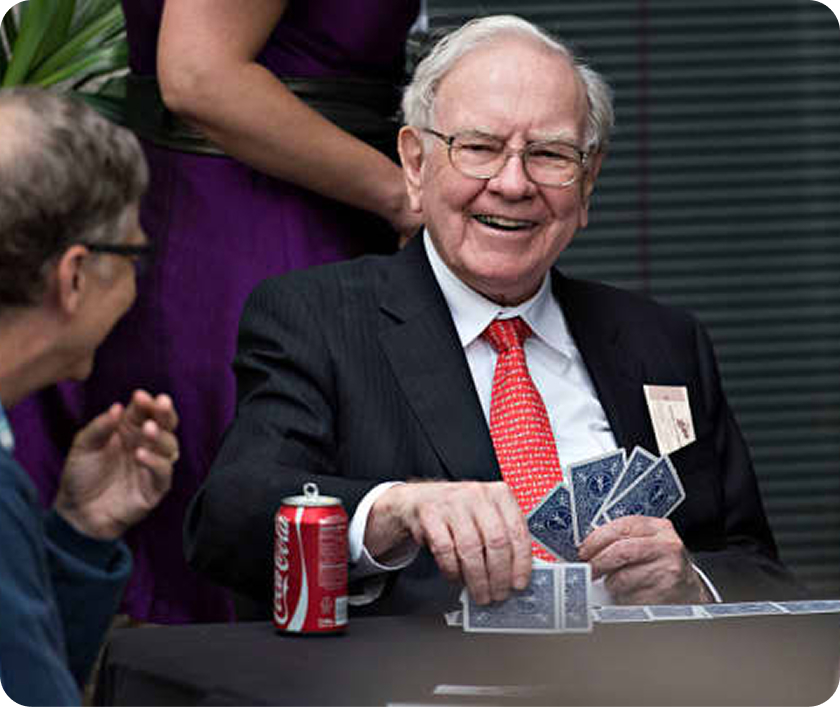
Why Warren Buffett Plays Bridge Every Week (And What You Can Learn from Him)
Warren Buffett, one of the most successful investors in history, is known for his disciplined thinking, long-term strategy, and calm decision-making. Among his many well-documented habits is a lifelong passion for playing bridge. Buffett has openly stated that he plays bridge several times a week and considers it both enjoyable and mentally stimulating. But why does a billionaire investor devote so much time to a card game—and what lessons can everyday players and professionals learn from it?
Warren Buffett’s Longstanding Love for Bridge
Warren Buffett has been playing bridge for decades and frequently mentions it in interviews as one of his favorite activities. He has even hosted bridge games at his home and partnered with world-class players. For Buffett, bridge is not just a pastime—it is a serious mental exercise.
He has often compared bridge to investing, noting that both require patience, logic, and the ability to make sound decisions with incomplete information.
Bridge and the Art of Thinking Long-Term
One of the defining traits of Warren Buffett’s investing philosophy is long-term thinking. Bridge reinforces this mindset by forcing players to plan several moves ahead while remaining flexible as new information emerges.
In bridge, players must:
- Plan an overall strategy for each hand
- Delay immediate rewards for better long-term outcomes
- Adjust tactics as cards are revealed
This mirrors Buffett’s investment approach, where success comes from resisting short-term impulses and focusing on sustainable, long-term value.
Making Smart Decisions with Incomplete Information
In both bridge and investing, players never have access to all the facts. You cannot see all the cards, just as investors cannot predict the future with certainty. Yet decisions must still be made.
Bridge trains players to:
- Analyze probabilities and likely scenarios
- Infer information from limited data
- Avoid emotional or impulsive decisions
This disciplined reasoning process is central to Buffett’s success and is one of the most transferable lessons bridge offers.
The Role of Patience and Emotional Control
Warren Buffett is famous for his patience—often waiting years for the right investment opportunity. Bridge rewards the same emotional discipline.
Successful bridge players learn to:
- Remain calm after mistakes or bad luck
- Avoid overreacting to short-term setbacks
- Stick to sound strategy under pressure
Buffett has emphasized that emotional control is essential in both bridge and investing, where panic and greed often lead to poor decisions.
Partnership, Trust, and Clear Communication
Bridge is played with a partner, and success depends on mutual understanding and trust. Players communicate through structured bidding systems and shared conventions, requiring discipline and consistency.
This reflects Buffett’s approach to business relationships, where trust, clarity, and long-term partnerships are highly valued.
Bridge helps develop:
- Trust-based collaboration
- Strategic alignment with a partner
- Clear communication within defined rules
Staying Mentally Sharp for Life
Buffett has repeatedly stated that bridge helps keep his mind sharp. The game engages memory, logic, and focus, making it an effective mental workout well into old age.
For Buffett, bridge offers:
- Continuous learning and mental stimulation
- Challenging problem-solving scenarios
- Enjoyment without physical strain
This highlights the value of finding intellectually engaging activities that can be sustained over a lifetime.
Lessons You Can Learn from Warren Buffett’s Bridge Habit
You don’t need to be a billionaire or a professional bridge player to benefit from the lessons Buffett draws from the game. Bridge encourages habits that apply broadly to life and work.
Key takeaways include:
- Think long-term rather than chasing quick wins
- Make informed decisions with limited information
- Control emotions under pressure
- Value trust and clear communication
- Commit to lifelong learning
Conclusion
Warren Buffett’s dedication to playing bridge every week is no coincidence. The game aligns perfectly with the principles that define his success—patience, strategic thinking, emotional control, and disciplined decision-making.
By adopting bridge as a regular habit, you are not just playing a card game—you are practicing the same mental skills that have guided one of the world’s most successful investors. In that sense, bridge offers lessons that extend far beyond the table.